
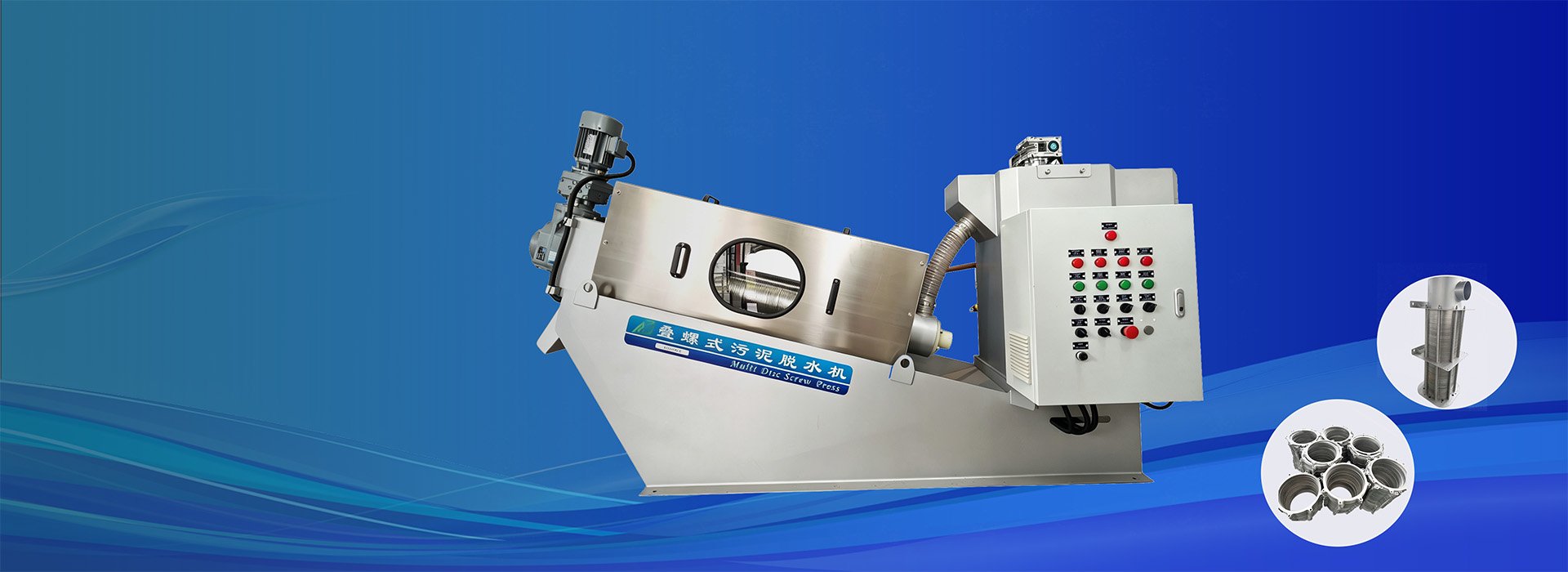
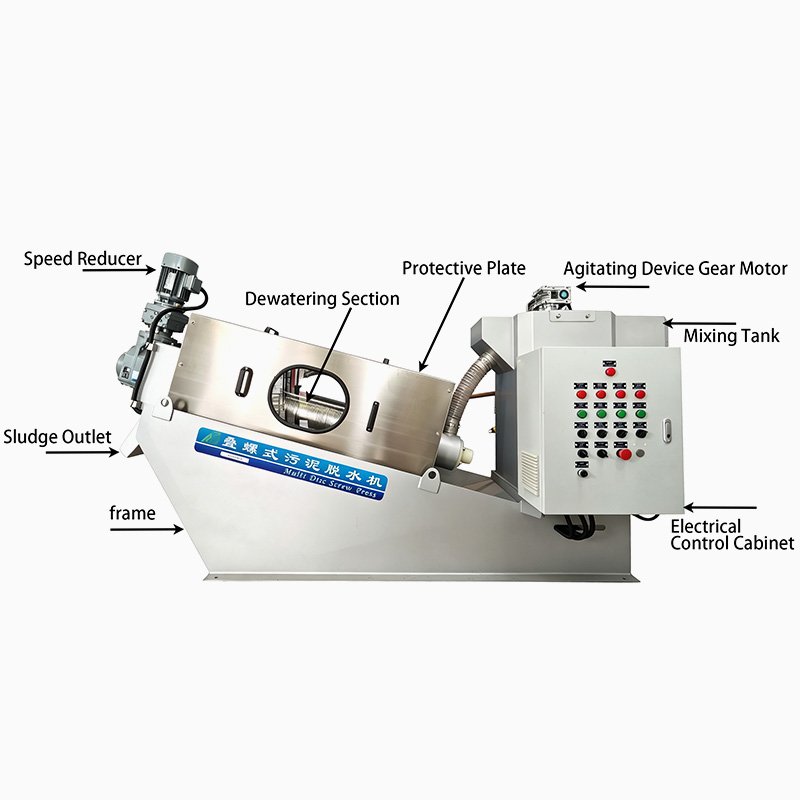
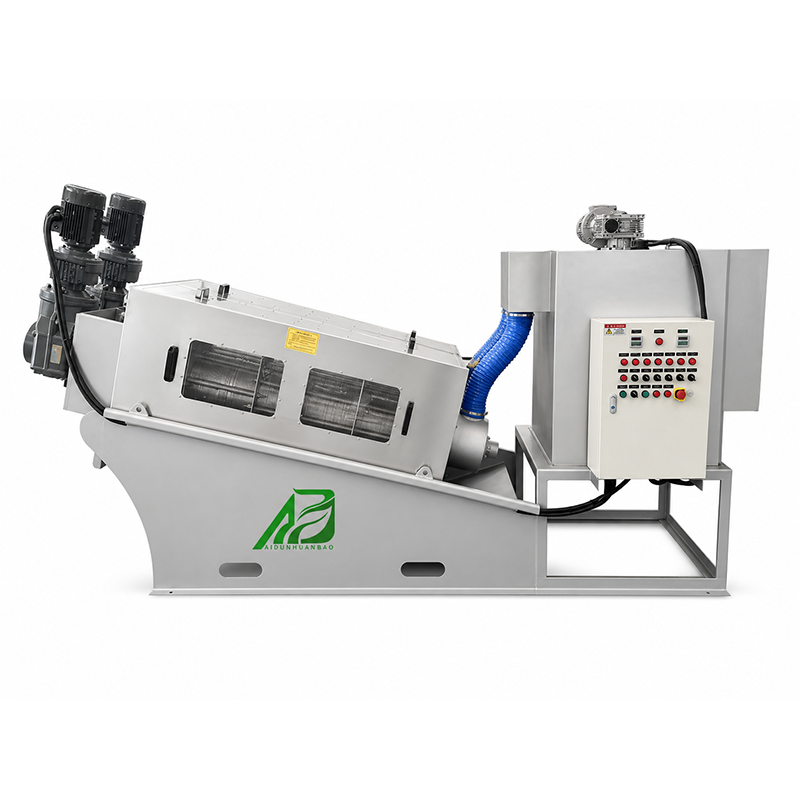
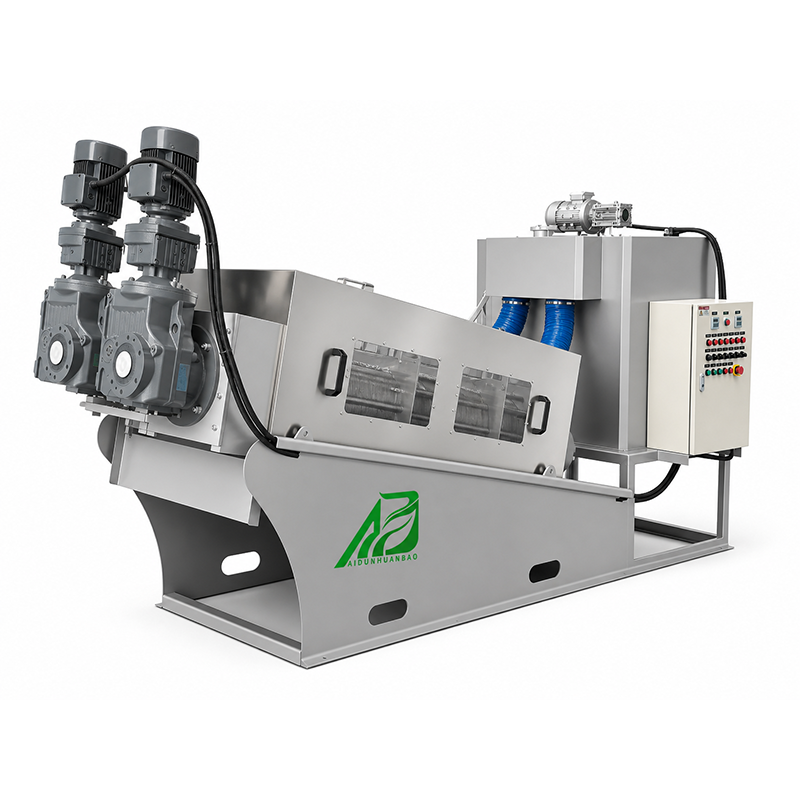
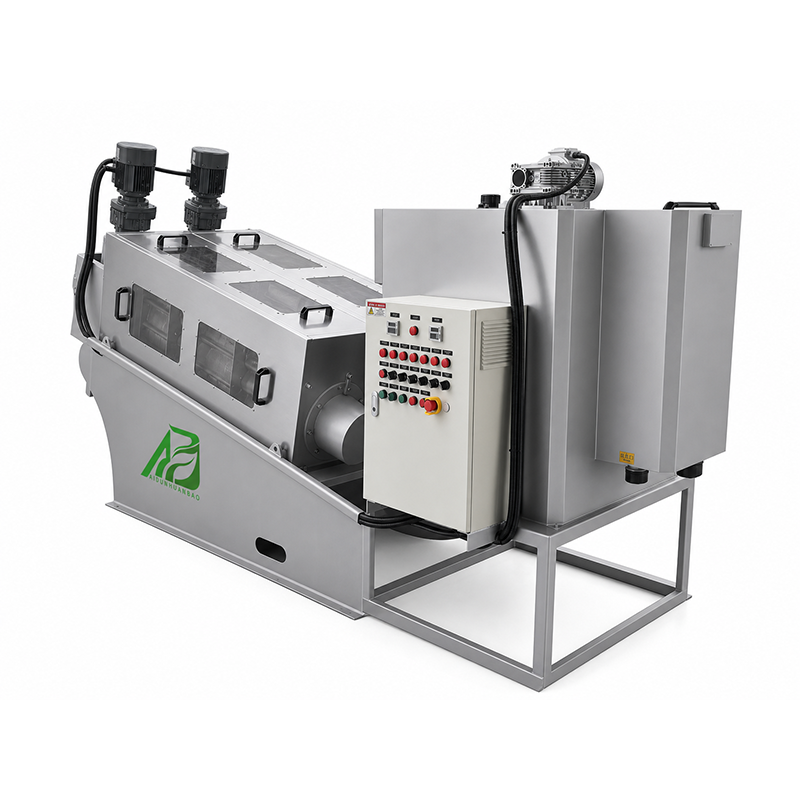
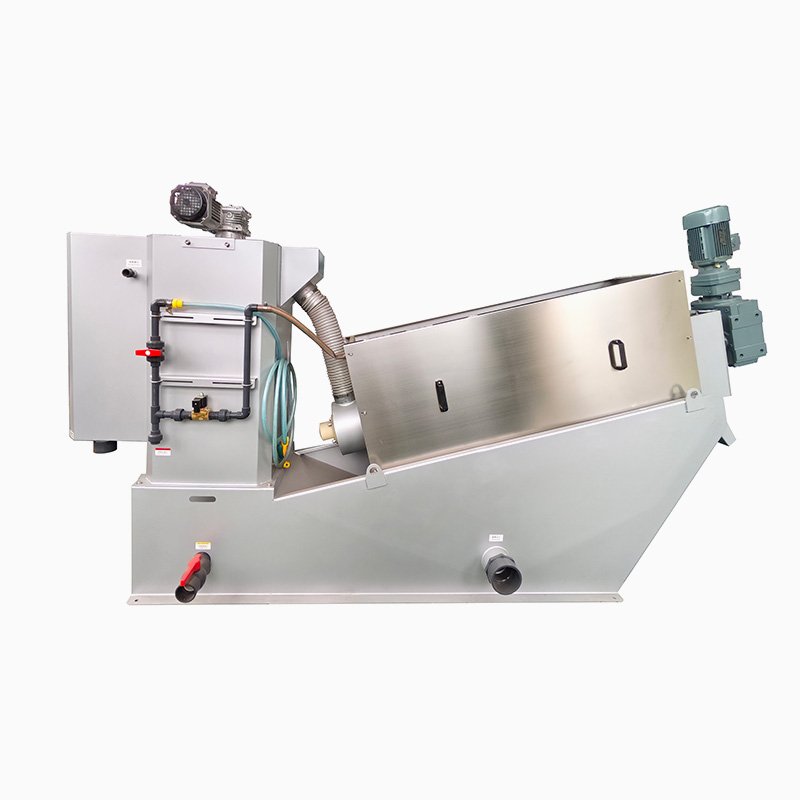
Why Choose Aidon Sludge Dewatering Machine?
- Compact footprint, easily adaptable to various installation environments
- Fully sealed construction, eliminating the risk of leaks
- Combines low energy consumption with high efficiency
- Easily handles a wide range of demanding operating conditions
- Supports one-touch start/stop and automatic monitoring
Aidon—Professional Manufacturer of Sludge Dewatering Machine
As a professional provider of comprehensive water treatment solutions, Aidon employs internationally leading production processes and operates eight standardized production lines, ensuring an annual production capacity of 8,000 sludge dewatering machines. With years of experience in manufacturing environmental protection equipment, Aidon holds two Chinese invention patents for screw press technology, and its production system has been certified under the ISO 9001 Quality Management System.
Aidon consistently upholds a quality-first philosophy. Before shipment, every screw press undergoes calibration of core components, 48 hours of continuous load testing, and professional seaworthy packaging, ensuring it is ready for immediate use upon delivery.
Aidon Sludge Dewatering Machine Types
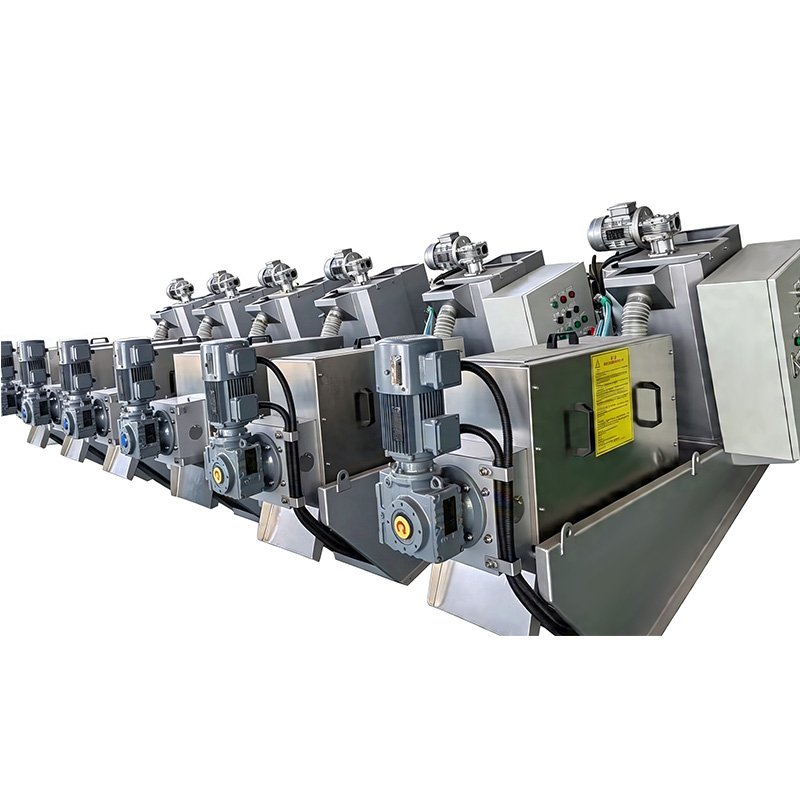
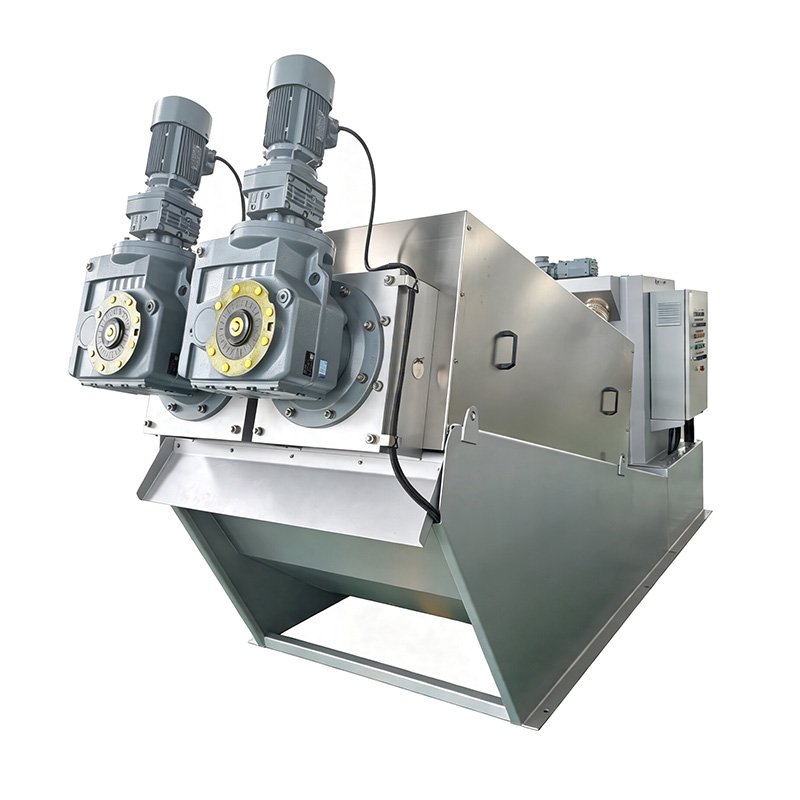
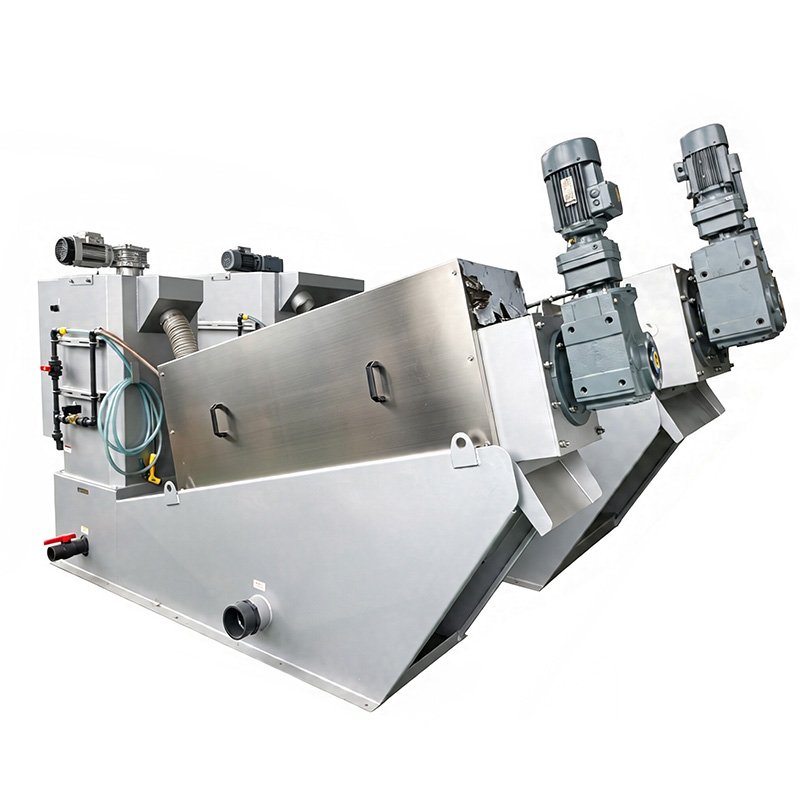
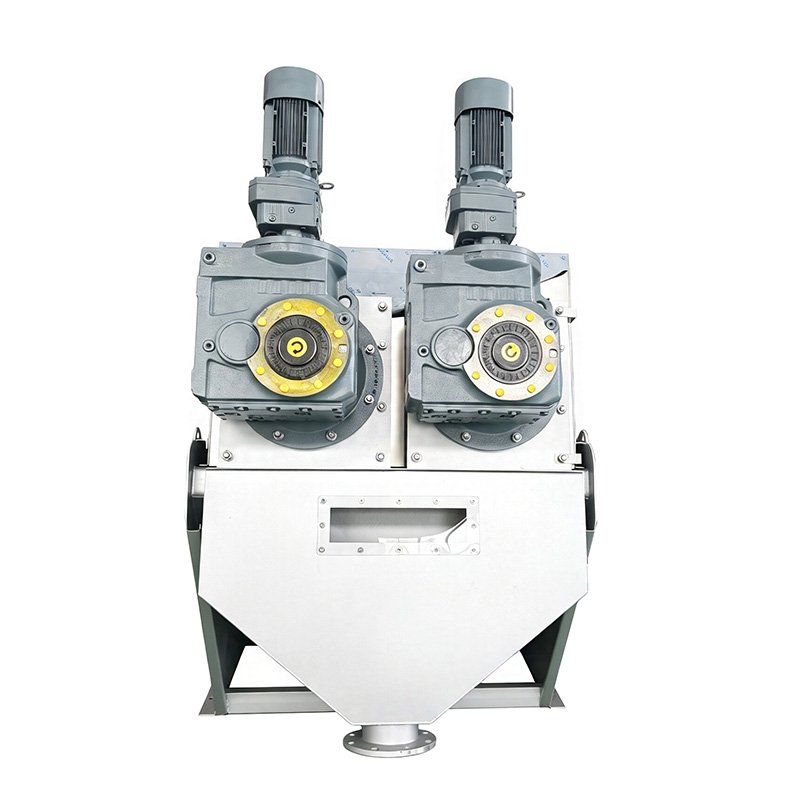
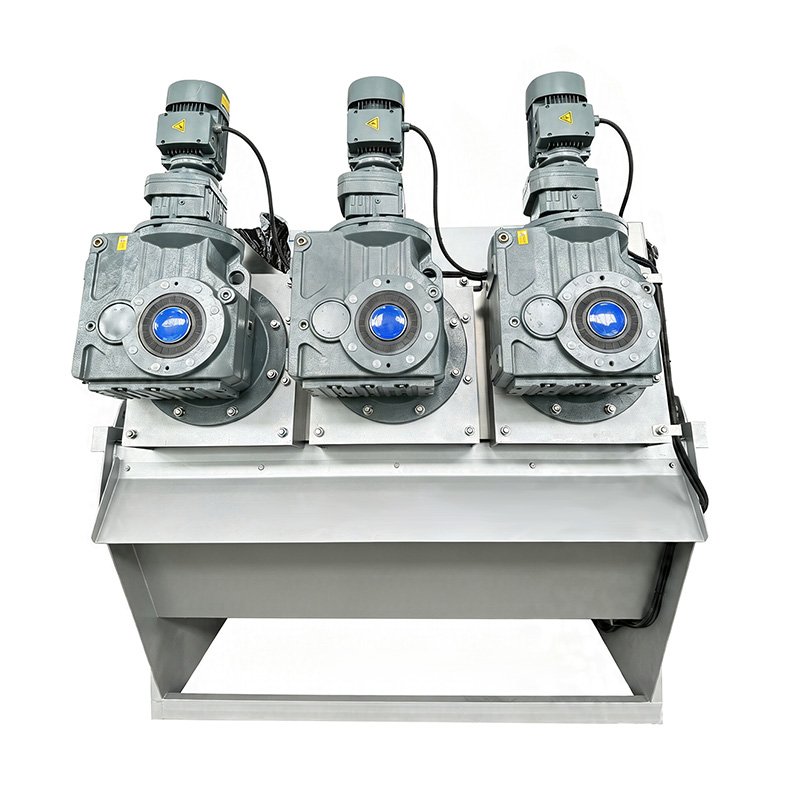
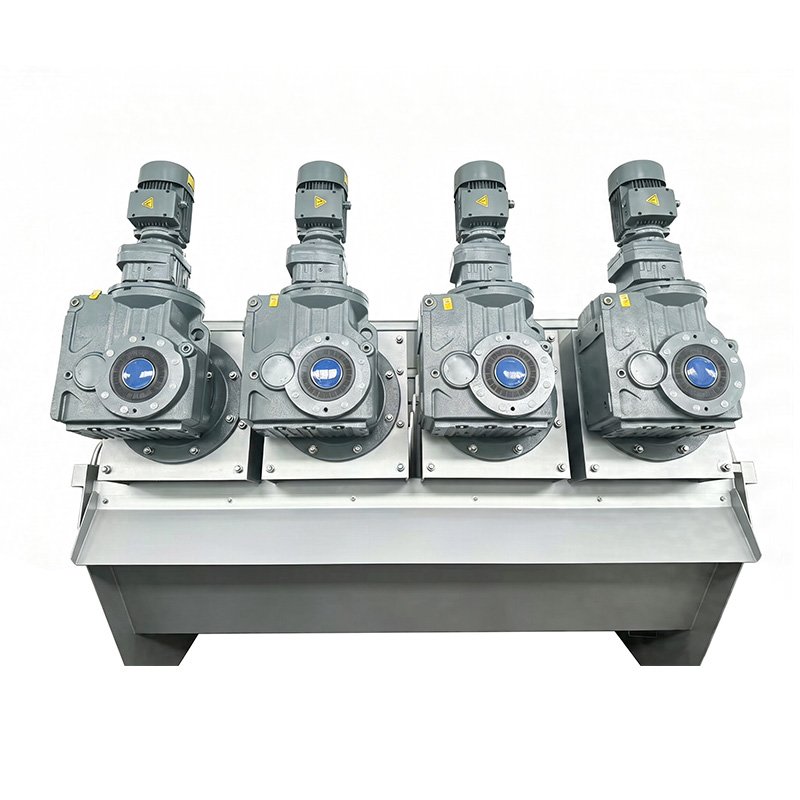
The larger the shaft diameter, the greater the extrusion volume and the higher the processing capacity; the more shafts there are, the greater the system throughput becomes.
Features of Our Sludge Dewatering Machine

The sealed enclosure design prevents odors from escaping and sludge from splashing.

Aidon continuously conducts tests against similar products on the market, achieving an average energy efficiency improvement of 13%.

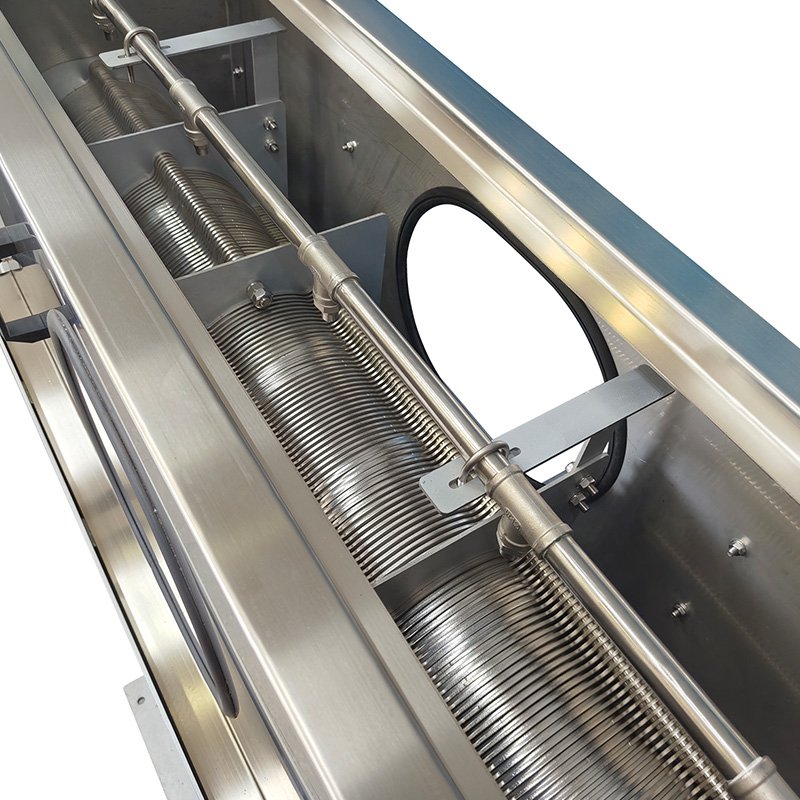
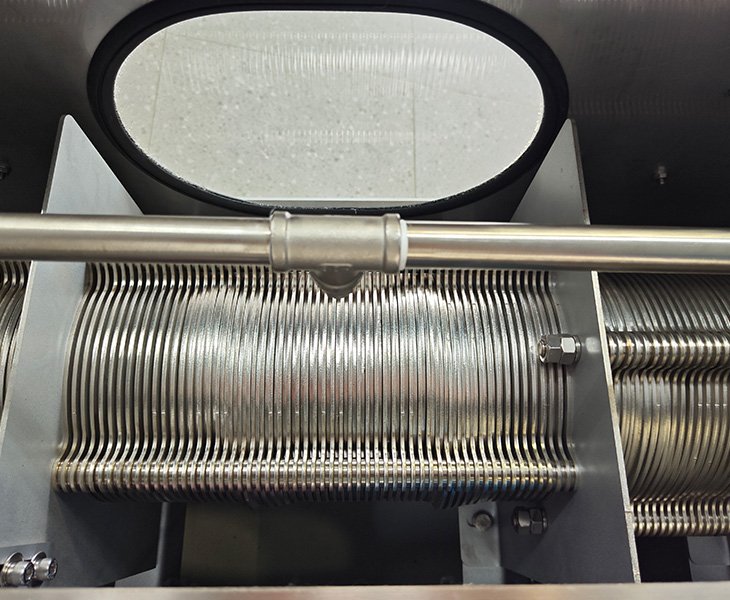
The moving stationary ring replaces the filter cloth used in traditional dewatering machines, reducing downtime for cleaning and improving sludge discharge efficiency.

Suitable for harsh environments involving high-concentration, high-viscosity sludge, such as those found in the paper and petroleum industries.

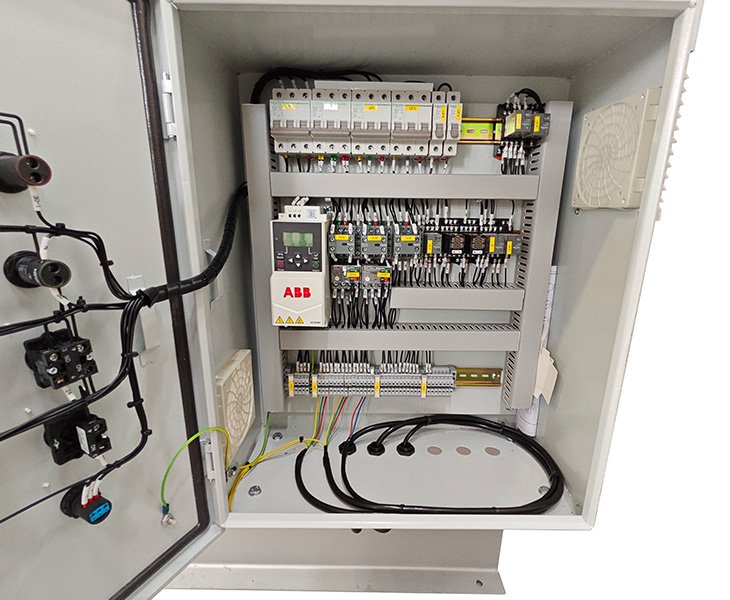
The automated control system supports one-touch start/stop and automatic monitoring, enabling unattended operation.

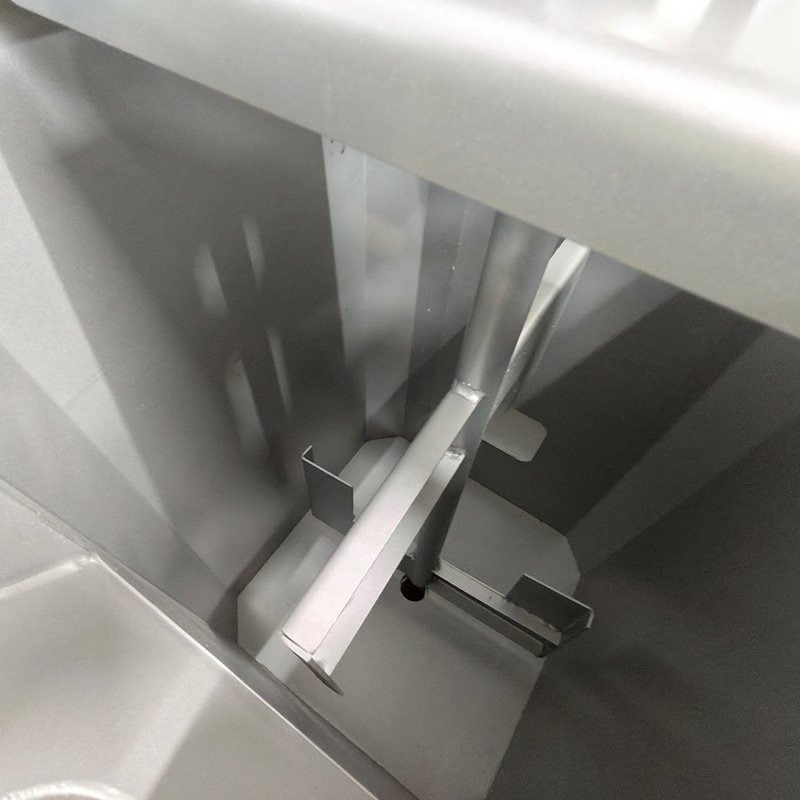
The superior one-piece curved molding process replaces the traditional internal right-angle welded structure, reducing the risk of sludge buildup and effectively lowering the failure rate.
No Clogging When Handling Oil-Contaminated Sludge
The greatest advantage of the sludge dewatering screw press lies in its self-cleaning capability, which is unmatched by traditional belt filter presses and plate-and-frame filter presses. By utilizing rotating and stationary rings—which replace the filter cloth found in traditional filter presses—the physical properties and operating principles of these rings enable continuous self-cleaning. This significantly reduces the need for high-pressure water washing during downtime, thereby conserving resources and improving operational efficiency.
Fully Automated Process, Unattended Operation
Aidon screw filter press are equipped with intelligent control systems. Our products come standard with one-touch start/stop functionality and a fully automated operational monitoring system, which effectively addresses staffing shortages and reduces your operating costs. You can customize programs based on specific operational requirements, and during subsequent use, only one person is needed to monitor the machine’s operational status. As experts in comprehensive water treatment system services, Aidon provides supporting equipment such as metering pumps and three-phase dosing units to achieve fully automated, integrated operation from feeding, dosing, dissolution, mixing, and treatment to sludge discharge.
Aidon Sludge Dewatering Machine Suitable for?
If the chemicals you need to handle are not listed below, please contact us. We can provide you with a customized solution at no cost.
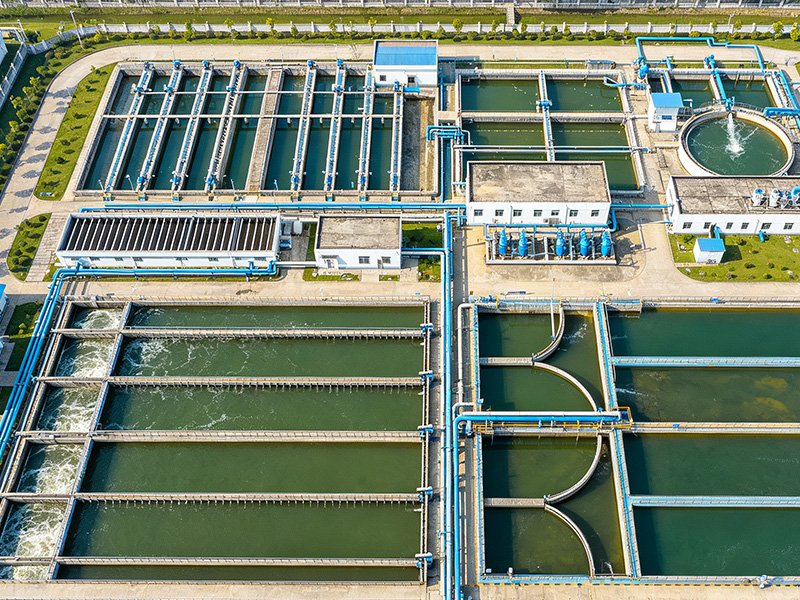
Sludge treatment for industries such as food processing, aquaculture, textile printing and dyeing, pharmaceuticals, and petrochemicals; particularly suitable for dewatering oily and viscous sludge.
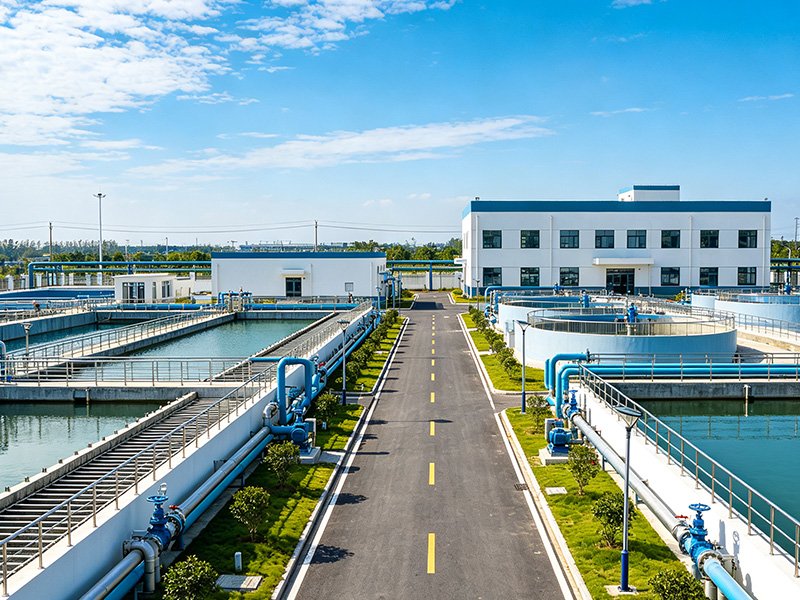
Suitable for the sludge dewatering stage in small- and medium-sized wastewater treatment plants, particularly for renovation and expansion projects with limited space.
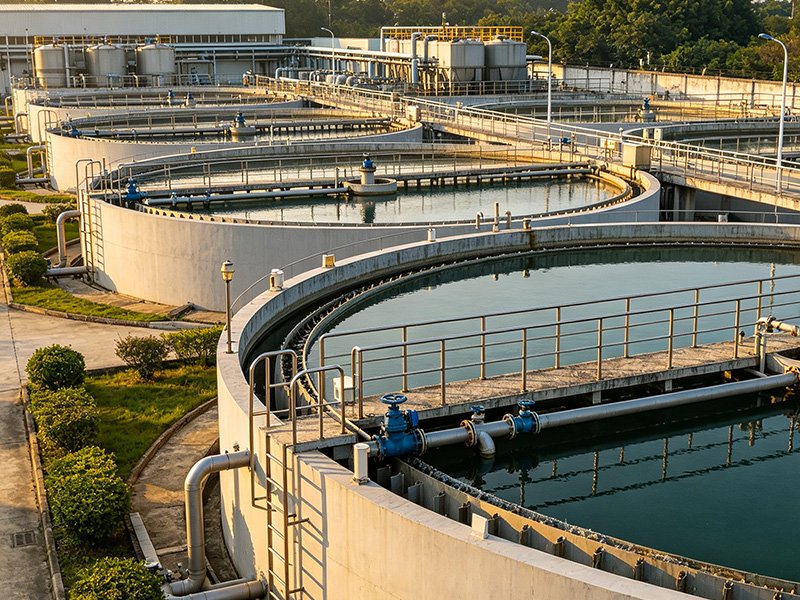
Community wastewater treatment stations, hospital wastewater treatment equipment, food waste treatment stations, and other applications where automation and efficiency are prioritized.
- Selection Parameter Table
| Model | Motor Power | Water pressure for cleaning | Hourly water consumption for cleaning (liters) | Daily maintenance time | ||
| Auger | Mixer | Total | ||||
| DL131 | 0.25 | 0.37 | 0.62 | 0.1MPa~0.2MPa (No high-pressure washing equipment required) | 48 | 5 minutes |
| DL201 | 0.37 | 0.37 | 0.74 | 32 | ||
| DL202 | 0.55*2 | 0.55 | 1.65 | 64 | ||
| DL251 | 0.37 | 0.37 | 0.74 | 96 | ||
| DL301 | 0.75 | 0.55 | 1.3 | 40 | ||
| DL302 | 0.75*2 | 0.75 | 2.25 | 80 | ||
| DL303 | 0.75*3 | 0.75 | 3 | 120 | ||
| DL304 | 0.75*4 | 0.75*2 | 4.5 | 160 | ||
| DL351 | 1.1 | 0.75 | 1.85 | 60 | ||
| DL352 | 1.1*2 | 0.75 | 2.95 | 120 | ||
| DL353 | 1.5*3 | 0.75*2 | 6 | 180 | ||
| DL401 | 1.5 | 0.75 | 2.25 | 80 | ||
| DL402 | 1.5*2 | 0.75 | 3.75 | 160 | ||
| DL403 | 1.5*3 | 0.75*2 | 6 | 240 | ||
| DL404 | 1.5*4 | 0.75*2 | 7.5 | 320 | ||
Aidon volute screw presses are equipped with adjustable back pressure plates that allow you to balance the dryness and discharge rate of the dewatered sludge according to your needs. Typically, the moisture content of municipal sludge and high-contamination sludge generated by chemical plants and refineries falls within the range of 75% to 85%.
As the core components of the sludge dewatering machine, the spiral shaft and the moving and stationary rings do not experience intense friction; there is a small gap between them. Aidon hardens the ring plates and employs a low-speed design. Market validation has shown that these components offer superior stability and a longer service life compared to similar products. Additionally, Aidon provides a 1-year warranty on core components to give you peace of mind.
Yes. Self-cleaning and clog-free operation are the greatest advantages of the sludge dewatering screw pres. Unlike traditional belt presses, which require large amounts of high-pressure water daily to rinse the filter cloth, the screw filter press only needs a small amount of water to moisten the surface of the rings. It relies on the movement between the stationary and moving rings to perform a dynamic self-cleaning process.
The Design Principles of the Screw Press
The main body of the stacked screw sludge dewatering machine consists of multiple fixed rings and floating rings, with a screw shaft running through them to form a filtration unit. The front section serves as the thickening section, while the rear section functions as the dewatering section. This design completes both sludge thickening and pressure dewatering within a single cylinder, replacing traditional filtration methods—such as filter cloths and centrifuges—with a unique and sophisticated filtration mechanism.
The Dewatering Principle of Screw Presses
After undergoing gravity thickening in the thickening section, the sludge is transported to the dewatering section. As it moves forward, the gradually decreasing filter gap and screw pitch, combined with the blocking effect of the back pressure plate, generate significant internal pressure, causing the volume to continuously decrease and achieving thorough dewatering.
Concentration: As the screw drive shaft rotates, the multiple fixed and movable plates arranged around the shaft move relative to one another. Under the force of gravity, water filters out through the gaps between the moving plates, achieving rapid concentration.
Dewatering: The concentrated sludge continuously moves forward as the screw shaft rotates; toward the cake discharge outlet, where the pitch of the screw shaft gradually decreases, the gaps between the rings also gradually narrow, and the volume of the screw chamber continuously contracts; under the action of the back pressure plate at the outlet, internal pressure gradually increases. As the screw drive shaft operates continuously and sequentially, water is squeezed out of the sludge, the solids content of the filter cake continuously rises, and continuous sludge dewatering is ultimately achieved.
Self-cleaning: The rotation of the screw shaft drives the floating rings to rotate continuously. The equipment relies on the movement between the fixed rings and the floating rings to achieve a continuous self-cleaning process, thereby ingeniously avoiding the clogging issues commonly found in traditional dewatering machines.